
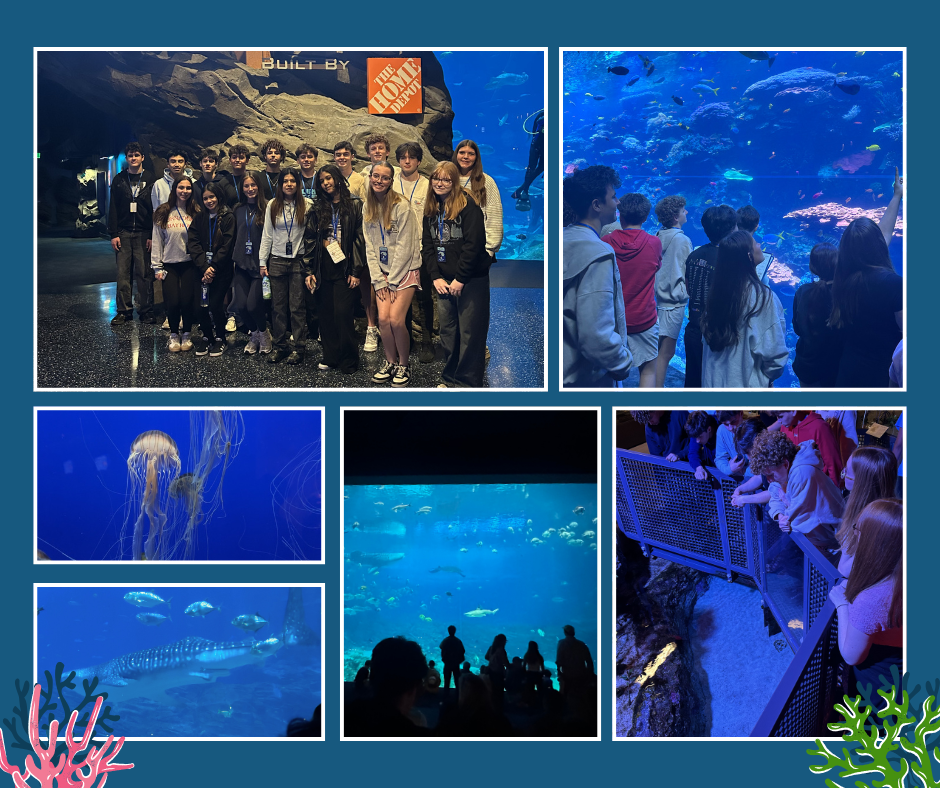
Our AICE Travel & Tourism class recently had the incredible opportunity to organize and participate in an overnight field experience at the Georgia Aquarium. Senior Savy Pate said, "What made this trip meaningful was that it wasn’t just a fun getaway — it was an extension of our classroom learning and a real-world application of the concepts we study throughout the course."
During the visit, the students took part in a behind-the-scenes tour that gave them a deeper understanding of marine life care, exhibit management, and daily aquarium operations. Seeing how much work goes into maintaining such a large and respected facility gave us a new appreciation for both the science and dedication behind it.
In addition to marine biology, the trip directly connected to our Travel & Tourism curriculum. We explored how major attractions like the Georgia Aquarium operate within the global tourism industry. Staff members discussed sustainable travel practices, ecotourism initiatives, and the importance of environmental responsibility in attracting and educating visitors. We examined how tourism businesses balance profitability with conservation, and how experiences like ours can raise awareness about protecting marine ecosystems.
They slept in a viewing gallery alongside Ushawn, the whale shark, as well as several rays and countless species of fish. Watching these animals glide through the water after hours was both peaceful and awe-inspiring. It created a unique atmosphere that combined education with a sense of wonder — something few classroom settings can replicate.
Beyond the trip itself, this experience reflects the structure and expectations of the AICE Travel & Tourism course. Throughout the year, students are required to conduct two feasibility studies, where we evaluate the practicality and potential success of proposed tourism-related events. After selecting an event, we develop a detailed business plan that outlines budgeting, marketing strategies, target audiences, logistics, and risk management. We then carry out the event and complete a full evaluation afterward, analyzing what worked well and what could be improved.
Organizing and participating in experiences like the overnight aquarium trip helps us apply these business and tourism principles in meaningful ways. We are not just learning theory — they are actively planning, assessing, and reflecting like professionals in the industry.
Overall, the Georgia Aquarium trip was more than just an overnight stay; it was a hands-on learning experience that combined marine science, sustainable tourism, and business strategy.